
Why a signed piece from a great house resells for multiples of an unsigned one, how period and provenance are priced and which contemporary pieces are becoming tomorrow’s heirlooms.
In short
- Signed pieces from Cartier, Van Cleef & Arpels, Bulgari and Tiffany hold value far better than unsigned pieces of equal material.
- Original boxes, papers and receipts add real money. Keep everything.
- Buy the pieces a house is known for: the Alhambra, the Serpenti, the Love bracelet, the Trinity ring. Icons resell, experiments rarely do.
Why the signature matters
Two bracelets of identical gold weight and diamond quality can differ in resale value by a factor of three. The difference is the signature. A piece by Cartier, Van Cleef & Arpels, Bulgari, Tiffany, Boucheron, Chaumet or Graff carries the house’s design, workmanship and, above all, its demand at auction. Unsigned jewelry is valued close to its materials; signed jewelry is valued as a work.
Period and provenance
Art Deco (1920s to 1930s) is the most sought-after period in the secondary market: geometric platinum settings, calibré-cut stones and a level of craft that is expensive to replicate today. Retro pieces from the 1940s, in warm rose gold with bold volumes, have climbed fast. Provenance adds another layer: a piece with a documented history, an exhibition record or a famous first owner is priced as a story, not just as an object.
The icons that resell
Each great house has a handful of designs that are bought and sold constantly: Van Cleef’s Alhambra, Cartier’s Love and Juste un Clou, the Trinity ring, Bulgari’s Serpenti and B.zero1, Tiffany’s T and the classic six-prong solitaire. These pieces have deep secondary markets and predictable prices. A limited-edition experiment from the same house, however beautiful, may be much harder to sell.
Papers, boxes, receipts
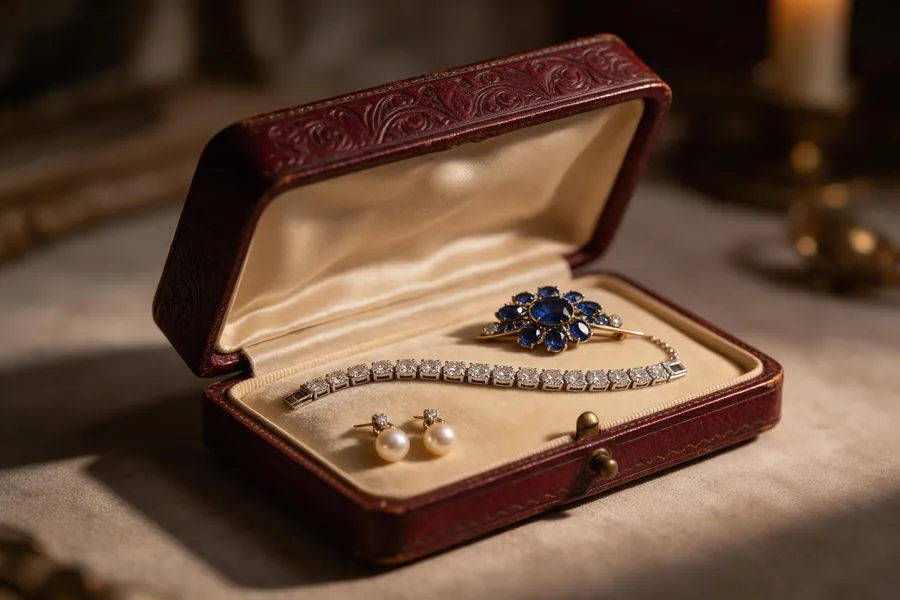
Keep the box, the certificate, the receipt and any service records. At resale, complete sets sell faster and higher. If you inherit a piece without papers, a house archive can often issue a certificate of authenticity for a fee; for Cartier and Van Cleef & Arpels this can turn a nice bracelet into a documented one.
What to buy new with an eye on later
Buy the piece a house is famous for, in the classic size and metal. Buy from the house itself or an authorised jeweler, and register the piece. Have it insured on an agreed-value policy and have the valuation updated every three years. Then wear it, because the best argument for fine jewelry is not the resale value, it is the thirty years of pleasure in between.
Where to sell
For signed pieces above a few thousand dollars, the auction houses (Sotheby’s, Christie’s, Bonhams, Phillips) reach the buyers who pay for signatures. For quicker sales, specialised dealers buy outright at a discount. Never sell a signed piece to a gold buyer: they pay for metal, and the signature is worth more than the metal.
Try it yourself
Diamond Price CalculatorCarat, colour, clarity, cut and shape: an indicative retail price range for a natural or lab-grown diamond.Questions people ask
Does jewelry appreciate in value?
Signed pieces from major houses and top-quality coloured stones have appreciated strongly over the past two decades. Unsigned jewelry usually tracks metal and stone prices only.
Should I keep the original box?
Yes. Box, certificate and receipt together can add ten to twenty percent at resale and make authentication instant.
How often should I have jewelry valued?
Every three years, or after a big move in gold or diamond prices, so that the insurance value keeps pace.
Share