
Why the finest coloured stones now outperform diamonds at auction, what origin and treatment mean for the price and how to choose a sapphire, emerald or ruby that will still glow in twenty years.
In short
- Colour is everything: saturation and hue decide the price long before size does.
- Ask for a laboratory report that states origin and treatment. Unheated and untreated stones command a premium.
- Emeralds are softer and almost always oiled; wear them as rings with care or as earrings and pendants without worry.
Why colour is having its moment
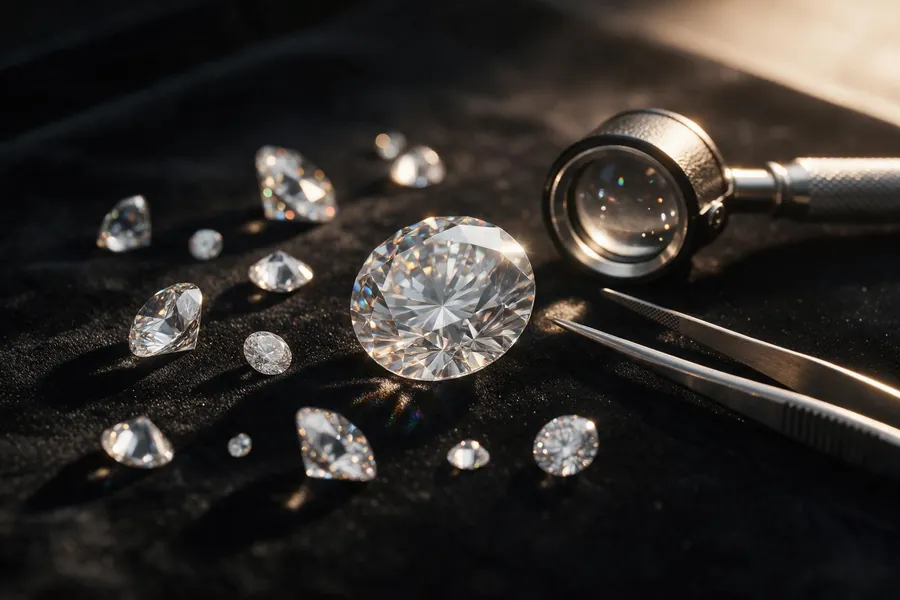
Great coloured stones are rarer than great diamonds, and the market has noticed. A top Kashmir sapphire, a Burmese ruby with pigeon-blood colour or a Colombian emerald with that particular bluish green can now fetch more per carat than any white diamond. For the private buyer, the interesting news is at the level below the record books: a fine two-carat Ceylon sapphire still costs less than a one-carat D flawless diamond and is, to most eyes, the more beautiful object.
Sapphire
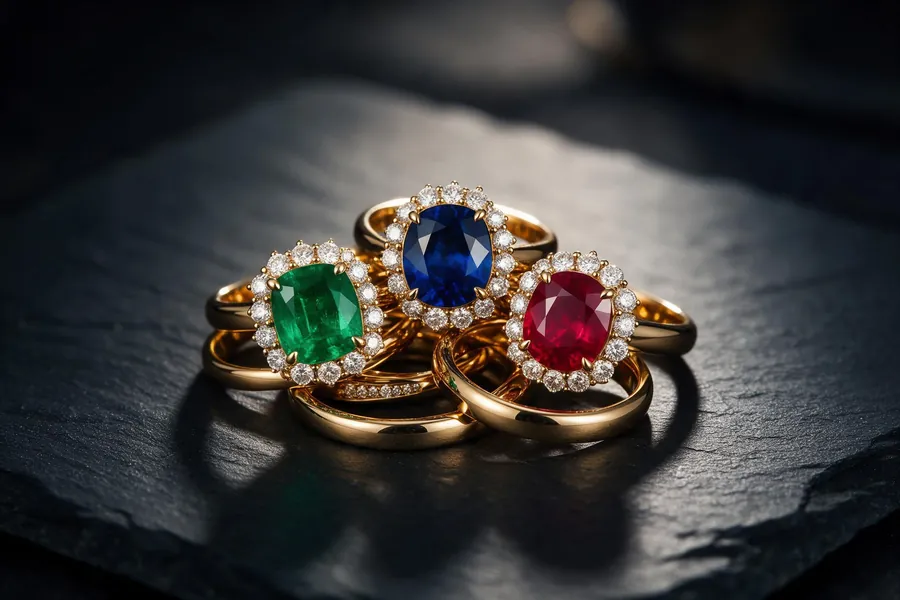
Sapphire is corundum, and it comes in every colour except red. The classic is a medium to deep velvety blue with strong saturation. Ceylon (Sri Lanka) stones are bright and lively, Madagascar stones can match them, Kashmir stones are the legend and priced like one. Pink, padparadscha (a pink-orange), yellow and teal sapphires are the modern connoisseur’s choice and often much better value. Sapphire scores nine on the Mohs scale, so it is perfectly happy in a ring worn every day.
Ruby
Ruby is red corundum, and the finest colour is a pure, slightly bluish red with high saturation. Burma (Myanmar) is the benchmark origin; Mozambique now produces superb stones at a fraction of the price. Almost all rubies are heated to improve colour and clarity. That is accepted and disclosed; what you want to avoid is glass-filled ruby, which is a composite and should be priced as one.
Emerald
Emerald is beryl coloured by chromium and vanadium. Colombian stones show a warm, slightly bluish green; Zambian stones are a cooler, deeper green and often cleaner. Nearly every emerald has fissures that are filled with oil or resin to improve appearance. Minor oil is normal; the laboratory report states the degree. Emerald is softer (7.5 to 8) and brittle, so a ring needs a protective setting and a little respect.
Origin, treatment, report
For any coloured stone above a few thousand dollars, ask for a report from Gübelin, SSEF, GRS or AGL. These laboratories state the origin and any treatment. An unheated Ceylon sapphire or an emerald with only minor oil carries a premium because it is rare. That premium is real and it survives resale.
How to look at a stone
Look at it in daylight, in the shade, under a warm lamp and at arm’s length. A great stone keeps its colour when you move it; a lesser stone goes dark in the shade or washes out in the sun. Ignore the loupe until you have done that. Colour first, then cut, then clarity, then size.
Try it yourself
Diamond Price CalculatorCarat, colour, clarity, cut and shape: an indicative retail price range for a natural or lab-grown diamond.Gift FinderWho it is for, the occasion and the budget: five luxury gift ideas that land, from a candle to a watch.Questions people ask
Is a sapphire cheaper than a diamond?
Weight for weight, most sapphires cost less than a diamond of comparable quality. The exceptions are top Kashmir and Burmese stones, which can exceed diamond prices.
What does heated mean on a sapphire report?
Heat treatment is a permanent, accepted process that improves colour and clarity. Unheated stones are rarer and priced higher; heated ones are still natural.
Can I wear an emerald ring every day?
You can, but with care. Choose a bezel or halo setting that protects the edges, remove it for sport and housework, and have it checked yearly.
Share