
The pearl strand has gone from heirloom to the most modern piece in the jewelry box. How the types differ, what lustre and surface mean, and why size is the last thing to worry about.
In short
- Lustre is the pearl equivalent of cut: sharp, mirror-like reflections signal a top pearl.
- Akoya for the classic white strand, South Sea for size and cream tones, Tahitian for grey, green and peacock colours.
- A strand should be restrung every two to three years if worn often. Knots between pearls are a sign of proper work.
Why now
For a generation, pearls meant grandmothers and boardrooms. Then designers started mixing baroque pearls with leather, showing single Tahitian drops on men and layering strands of different lengths, and the pearl became the most modern piece in fine jewelry. The reason it works is simple: pearls flatter skin in a way no cut stone can, and they photograph beautifully.
The four types
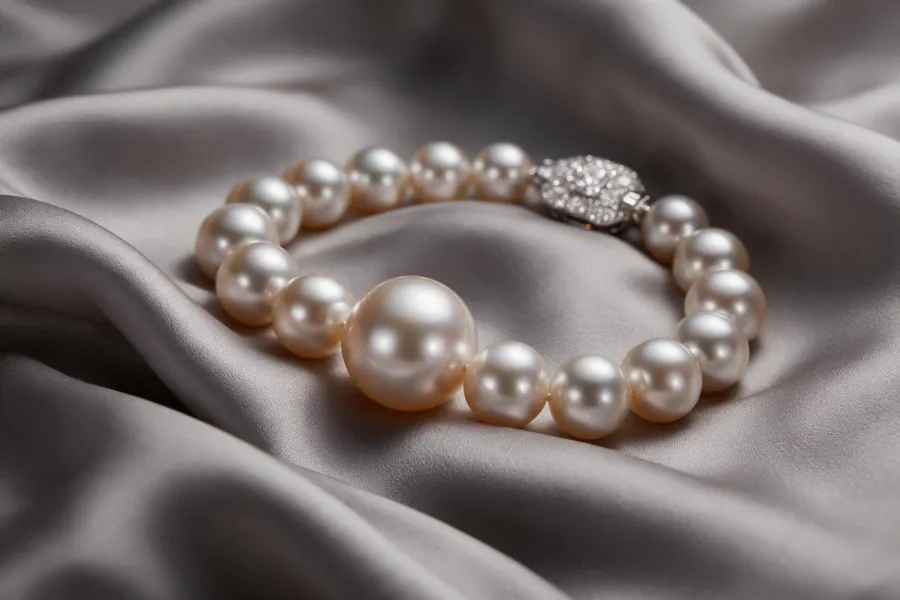
Akoya pearls, farmed mostly in Japan, are the classic: small to medium (6 to 9 mm), round, white with rose or silver overtones and the sharpest lustre of all. South Sea pearls from Australia, Indonesia and the Philippines are the largest (9 to 16 mm) with a soft, satin lustre in white, silver and gold. Tahitian pearls, from French Polynesia, are naturally dark: charcoal, green, aubergine and the famous peacock. Freshwater pearls, mostly from China, are the affordable entry and, at the top of the range, now rival Akoya in quality.
What to judge
Lustre first: hold the pearl near a window and look at the reflection of the window frame. A top pearl shows it crisply; a poor pearl shows a blur. Then surface: small blemishes are natural, but they should not dominate. Then matching, on a strand: colour, size and overtone should flow evenly. Then shape: round costs the most, but baroque and drop shapes have real character. Size last. A 7.5 mm Akoya strand of top lustre beats a dull 10 mm South Sea strand every day.
Buying a strand
A classic Akoya strand of 7 to 7.5 mm, 45 cm long, AAA quality, is the most versatile pearl purchase you can make. Expect a four-figure price from a good jeweler. A South Sea strand of 10 to 12 mm starts in the five figures and rises quickly with size and matching. Look for silk thread with a knot between every pearl, a clasp you can operate with one hand and a jeweler who offers restringing.
Care
Pearls are organic and soft. Put them on last, after perfume and hairspray, and take them off first. Wipe them with a soft cloth after wearing. Store them flat in a cloth pouch, never in a sealed plastic bag, because pearls need a little humidity. Restring every two to three years if the strand is worn weekly.
Try it yourself
Gift FinderWho it is for, the occasion and the budget: five luxury gift ideas that land, from a candle to a watch.Questions people ask
Are Tahitian pearls dyed?
No. Their dark colours are natural, produced by the black-lipped oyster. Dyed freshwater pearls exist and should be sold as such.
How do I know a pearl is real?
Rub it gently against a tooth: real pearls feel slightly gritty, imitations feel smooth. Real pearls also vary slightly from one to the next.
What is the most versatile pearl piece?
A single strand of 7 to 8 mm Akoya pearls, 45 cm long. It works with a suit, a dress and a sweater, and it suits every age.
Share