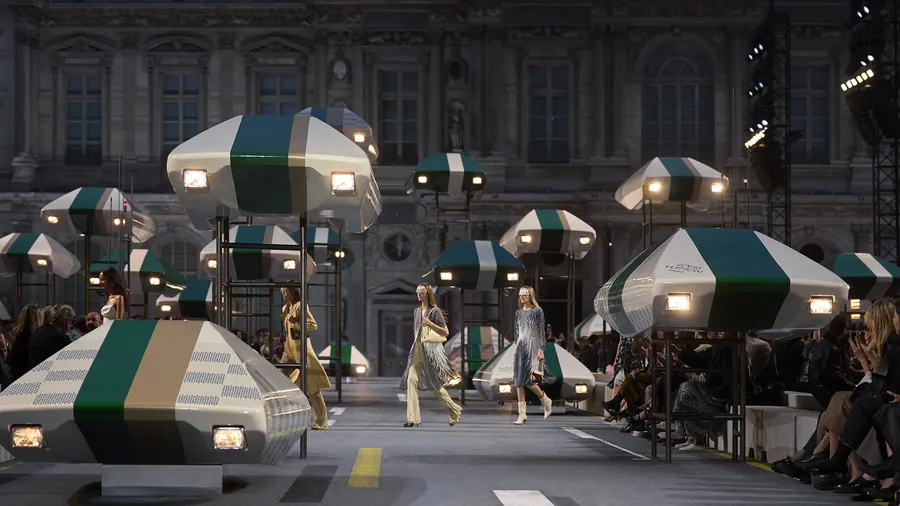
Louis Vuitton Spring-Summer 2027: in the Cour Carrée of the Louvre, Nicolas Ghesquière shows clothes shaped by the body in motion, with composite chiffons, scarf silks and lighter tailoring.
In short
- Nicolas Ghesquière takes ergonomics as his starting point: form follows function, and the clothes are meant to ease movement and to travel.
- The show is staged in the Cour Carrée of the Louvre as a paused cityscape in which the models seem to float.
- Double and triple composite chiffons, silk and cashmere scarf fabrics and tailoring stripped of its inner layers keep the collection light.
Ergonomics as a design brief
Ergonomics is not a word one expects to hear at a Paris fashion show. For Spring-Summer 2027, Louis Vuitton made it the starting point. Nicolas Ghesquière, who signs the collection, builds the season on a simple principle: the form of a garment follows from what it has to do. The pieces are meant to ease movement and to travel, and the house presents the result as a modern reading of its own heritage, guided by an ideal of lightness.
That idea suits a house that began with luggage. What changes here is the scale. Instead of a trunk or a bag, it is the clothing itself that is designed to move with the person wearing it.
A city that holds its breath
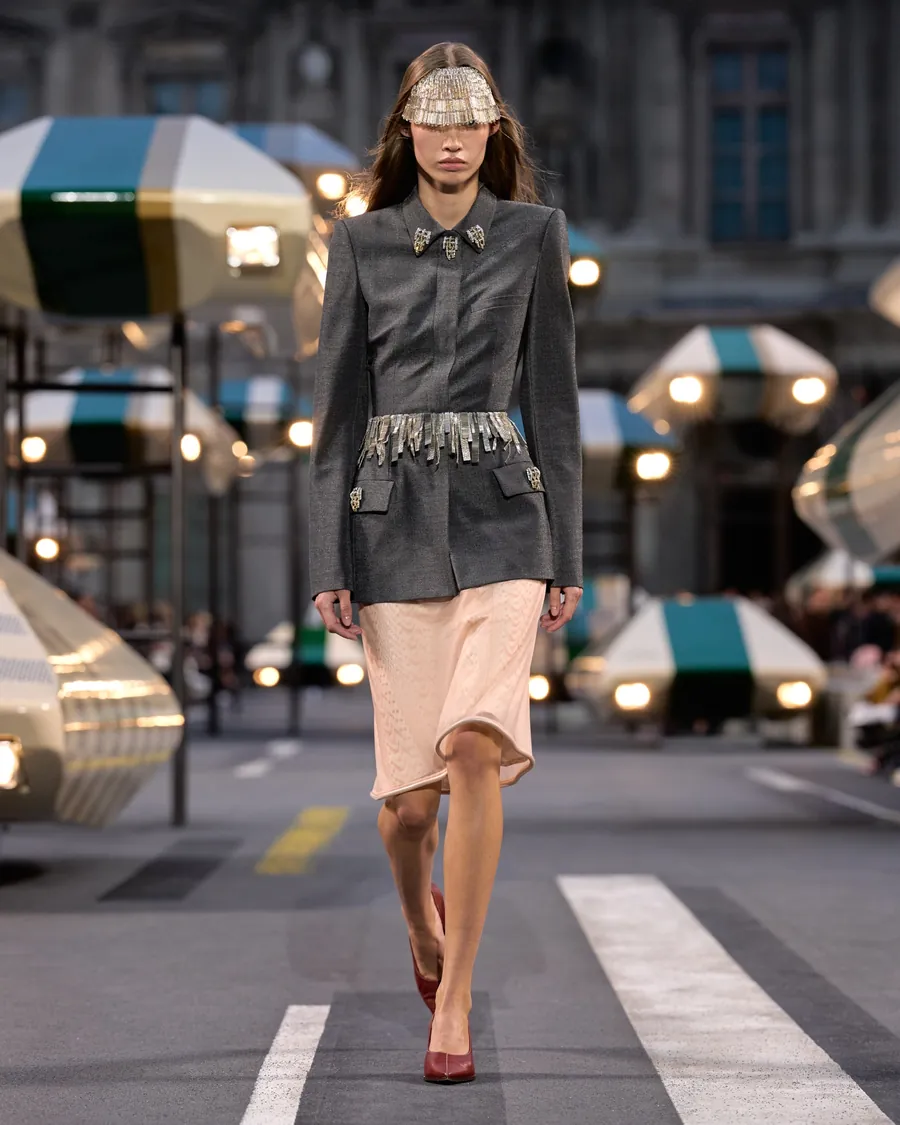
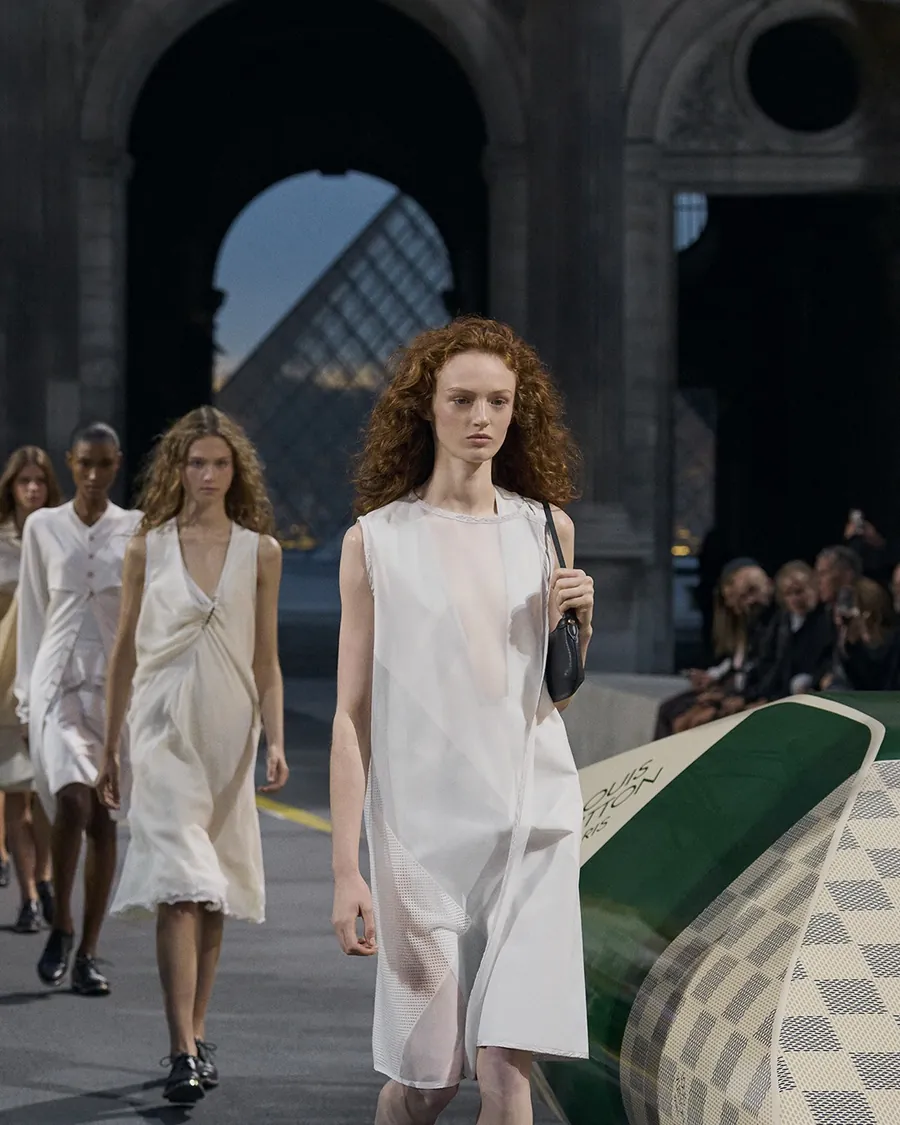
The setting was the Cour Carrée of the Louvre, and the staging thrived on contradiction and rupture. The models crossed it like singular figures in a cityscape that seemed to have stopped, as light as a feather or a balloon. The runway was marked like a street, and the stillness around the models made every gesture look larger. That was the point: against a frozen backdrop, the body in motion becomes the real subject.
Fabric that behaves like a second skin
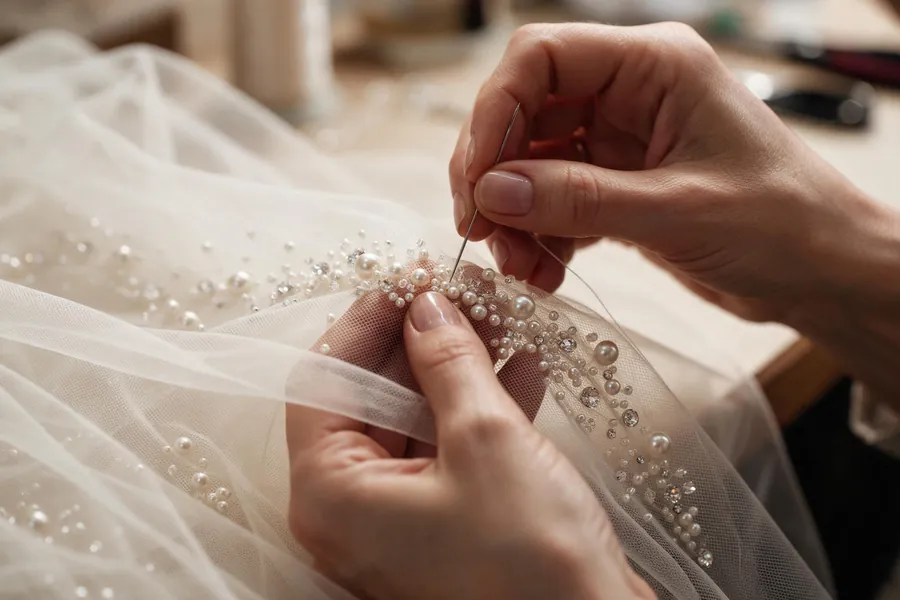
According to the house, nothing in this collection is rigid. The cut follows the body inside the garment, and materials and silhouettes were developed together so that they trace curves and contours. What looks simple hides demanding construction: surfaces under tension that mirror the body beneath them.
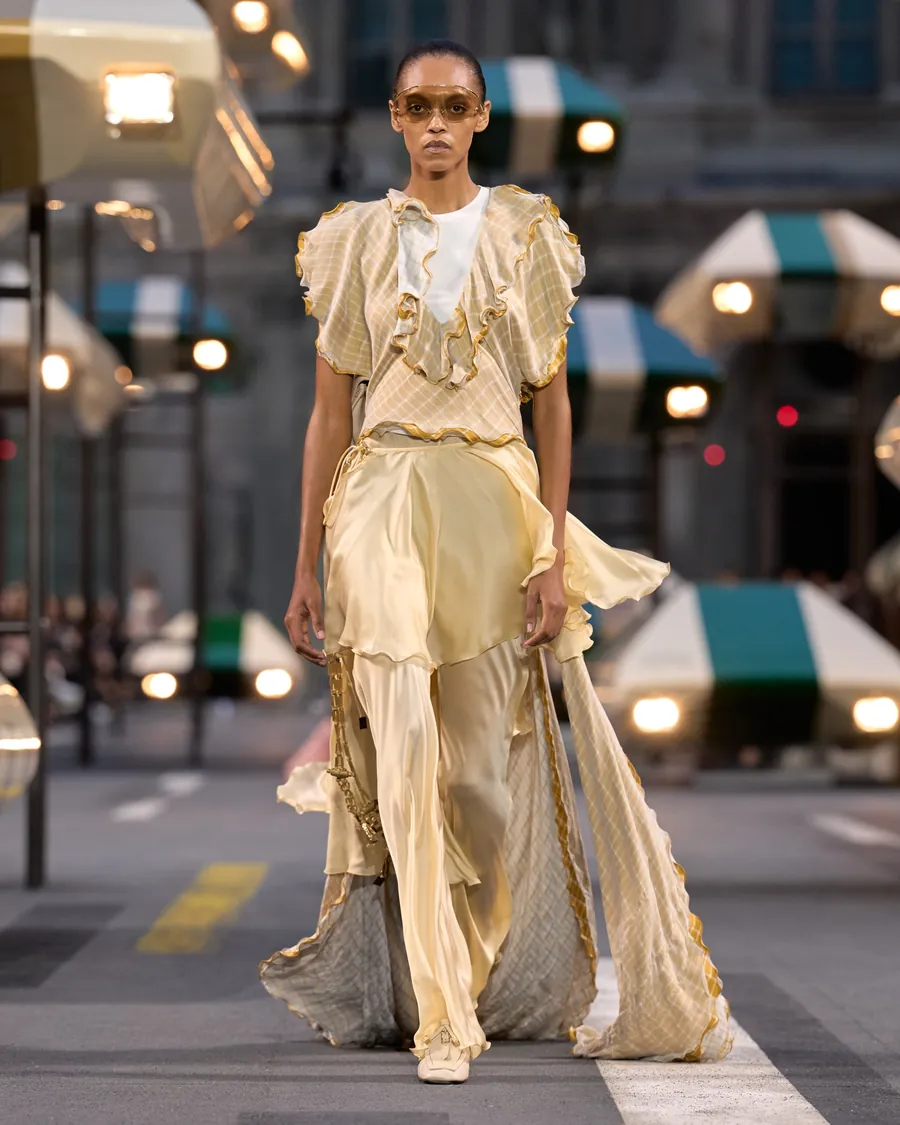
The fabrics carry most of that work. Ghesquière uses double and triple composite chiffons, and silk and cashmere fabrics of the kind usually reserved for scarves run through a whole range of garments. Leather and fine cloth are treated so that they feel like a second skin, both in the hand and in use. Knitwear draws clear lines, while the shoes give the otherwise weightless silhouettes their footing.
Tailoring without its scaffolding
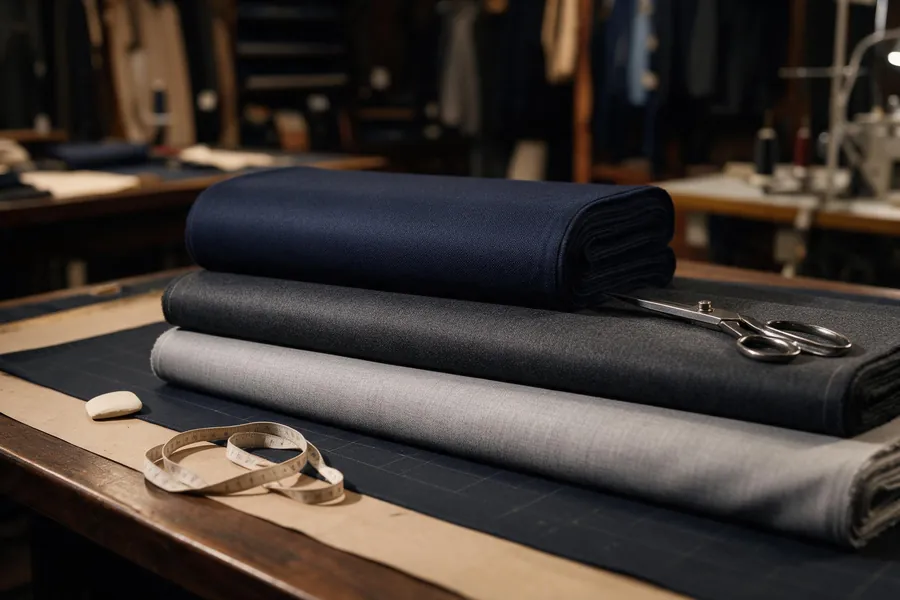
The most practical idea concerns tailoring. Classic construction was rethought and inner layers were removed, a process of reduction and streamlining. If you wear a jacket every day, this is the part to watch. In our experience, a jacket with less inside sits more lightly on the shoulders and is easier to pack.
What it means for your wardrobe
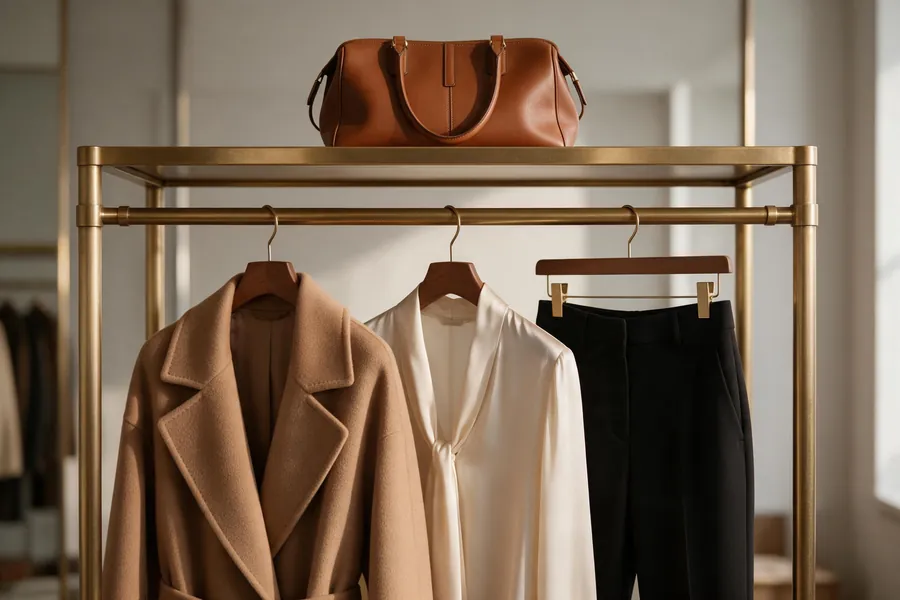
Runway collections are statements, but this one translates well into everyday life. Pieces in fluid composite fabrics and scarf silks are the ones that survive a long flight and still look composed on arrival. If you build your wardrobe the way we suggest in our guide to the luxury capsule wardrobe, one light jacket and one fluid dress from a collection like this can do the work of several heavier pieces.
Pay attention to weight as well: a piece in composite chiffon or scarf silk should feel like almost nothing in the hand and still hold its shape. Then try it on in motion: walk, sit down, lift your arms. Clothes designed around the body should prove it the moment you move, and that is the real test of this season.
Try it yourself
Gift FinderWho it is for, the occasion and the budget: five luxury gift ideas that land, from a candle to a watch.Questions people ask
Who designed the Louis Vuitton Spring-Summer 2027 collection?
Nicolas Ghesquière. He built the collection around ergonomics: form defined by function, made to ease movement and to travel.
Where was the Louis Vuitton Spring-Summer 2027 show held?
In the Cour Carrée of the Louvre in Paris, staged as a paused cityscape with a runway marked like a street.
Which materials define the collection?
Double and triple composite chiffons, silk and cashmere scarf fabrics used across many garments, leathers that feel like a second skin and tailoring with its inner layers removed.
Share