
From the Côte d’Azur and the Strait of Bonifacio to the Cyclades, the Exumas and Raja Ampat: the cruising grounds that define yachting, the right season for each and what makes them worth the passage.
In short
- The Mediterranean season runs from May to October; the Caribbean and the Bahamas from December to April, outside the Atlantic hurricane season.
- Choose by wind and distance: the Riviera and the Amalfi Coast for short hops, the Cyclades for open water and wind, Croatia and the Ionian for calm water and many anchorages.
- Beyond Europe, the Exumas, the Grenadines, the Seychelles and Raja Ampat reward a longer journey with emptier water.
How to read a cruising ground
Three things decide whether an area suits you: the distance between good anchorages, the prevailing wind and the season. Short distances mean more time at anchor and less time under way. The wind decides how comfortable the passages are and which side of an island you sleep on. The season decides the weather, the crowds and the price. Everything else, the restaurants, the beach clubs, the villages, comes after.
The Côte d’Azur and Monaco
The classic first charter: Monaco, Cap Ferrat, Antibes, Cannes and the Îles de Lérins, Saint-Tropez and the Îles d’Hyères, rarely more than a few hours apart. It is the most social cruising ground in the world, built around lunch ashore and evenings in port. When the mistral, the cold north-westerly wind of Provence, sets in for a few days, a good captain tucks you in behind a cape and moves the programme ashore.
Corsica, Sardinia and the Strait of Bonifacio
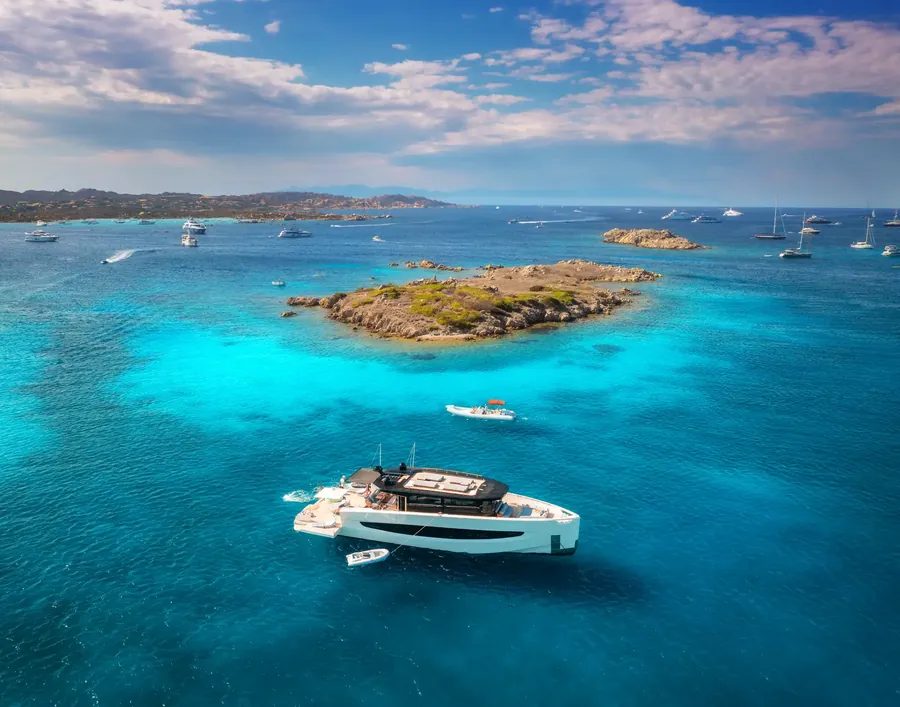
Granite, clear water and the Costa Smeralda. Off northern Sardinia, near the Strait of Bonifacio, lies the archipelago of La Maddalena, a national park with strict rules: the pink beach of Budelli may be admired from the water but no longer walked on. Porto Cervo is the social centre of the coast, and Bonifacio on its white cliff is one of the most dramatic arrivals in the Mediterranean.
The Balearics
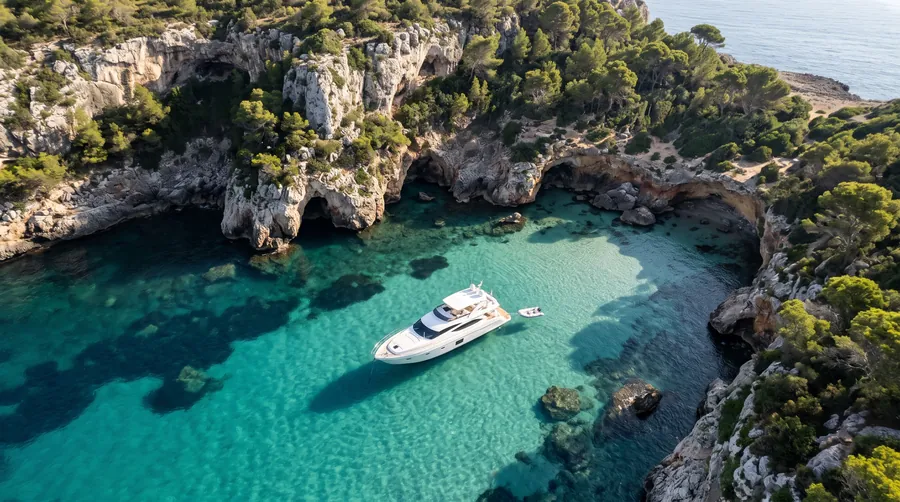
Mallorca, Menorca, Ibiza and Formentera combine excellent marinas with long sandy anchorages and turquoise water over seagrass. The Posidonia meadows that keep the water so clear are protected, and anchoring on them is prohibited, so captains look for sand patches or use the buoy fields. Palma is one of the great yachting cities, with refit yards, chandlers and an international crew scene.
The Amalfi Coast, Capri and the Aeolian Islands
Capri, Positano and Amalfi are best seen from the sea, and this is where a yacht earns its keep: no parking, no traffic, a tender to the jetty. Further south, the Aeolian Islands off Sicily add volcanic landscapes, with Stromboli still active and unforgettable from an anchorage at night.
Croatia and Montenegro
The Croatian coast counts more than a thousand islands, islets and reefs, with short distances and sheltered water between Split, Hvar, Vis and Korčula. The Kornati, declared a national park in 1980, are a stark limestone archipelago in northern Dalmatia, south of Zadar. Further south, the Bay of Kotor in Montenegro is a UNESCO-protected bay framed by mountains, with the superyacht marina of Porto Montenegro at Tivat.
Greece and the Turquoise Coast
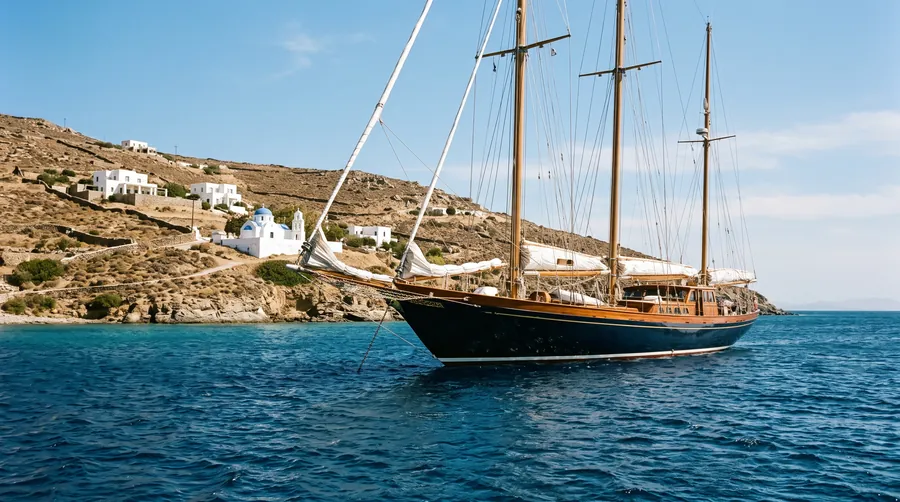
Greece has two characters. The Cyclades, from Mykonos and Paros to Milos and Folegandros, are open, bright and windy: the meltemi blows from about mid-May to mid-September and can reach force 7 to 8, so passages are planned for the morning and a well-stabilised yacht pays off. The Ionian, with Corfu, Paxos, Lefkada, Ithaca and Kefalonia, is greener and calmer, and ideal with children. Across the water, Turkey’s Turquoise Coast around Bodrum, Göcek and Fethiye is home to the gulet, the traditional wooden motor sailer, and to some of the most sheltered bays in the Mediterranean.
The Caribbean and the Bahamas
When the Mediterranean season ends, much of the charter fleet crosses the Atlantic. The Caribbean season runs from about December to April, outside the Atlantic hurricane season, which officially lasts from 1 June to 30 November. The British Virgin Islands offer easy sailing between many small islands; the Grenadines, with Mustique and the Tobago Cays, offer reefs and turtles; St Barths offers Gustavia, whose harbour fills with yachts around New Year. The Exumas in the Bahamas, more than 365 islands and cays about an hour by boat from Nassau to the northern cays, suit yachts with a modest draft and good tenders, and Thunderball Grotto off Staniel Cay is the famous swim.
Further afield
The Seychelles in the Indian Ocean combine granite islands with superb diving. In Thailand, the limestone towers of Phang Nga Bay rise straight out of the sea. And Raja Ampat in Indonesia, more than 1,500 small islands, cays and shoals off the north-western tip of New Guinea, lies in the Coral Triangle and is regarded as the epicentre of tropical marine biodiversity. It is best explored on a phinisi, the traditional Indonesian wooden sailing ship, or on an expedition yacht.
Try it yourself
Destination MatcherMonth, mood and budget: the three countries or regions that fit, with the season and the hotels.Luxury Year PlannerTravel, hotels, dining, wardrobe, watches, cars, wellness and gifts: build your luxury year and see the total, then share it.Questions people ask
When is the yacht charter season in the Mediterranean?
From May to October, with the peak in July and August. June and September are calmer and usually better value.
When is the best time for a Caribbean yacht charter?
From December to April, outside the Atlantic hurricane season, which officially runs from 1 June to 30 November.
Which cruising ground is best for a first charter?
The Côte d’Azur, the Balearics or the Ionian: short distances, sheltered anchorages and plenty to do ashore.
Share