
How classic cars are valued, which eras and marques hold, what provenance and matching numbers mean and how to buy a first collector car without paying for someone else’s restoration.
In short
- Value is provenance, originality, rarity and condition, in that order. A documented history beats a shiny respray.
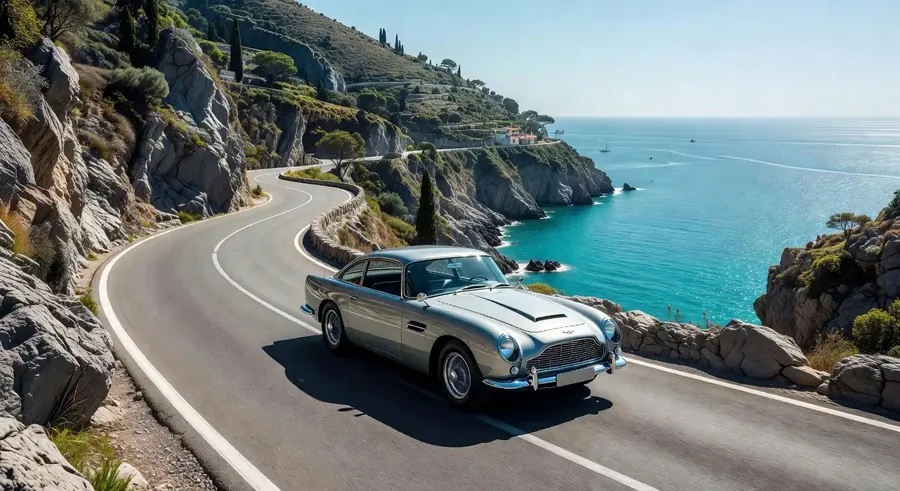
- Blue chips: Ferrari 250 to F40, Porsche 356 and early 911, Mercedes 300 SL, Jaguar E-Type and D-Type, Aston DB4 to DB6, Lamborghini Miura.
- Buy the best example you can afford from a specialist, have it inspected by an independent expert and budget 5 percent a year for upkeep.
What sets the price
Provenance: who owned it, where it raced, what the paperwork says. Originality: matching numbers (the engine and gearbox the factory installed), original panels, original interior. Rarity: how many were built and how many survive. Condition: concours, excellent, good, driver. A well-documented, original car in good condition is worth more than a rare car with a rebuilt engine and a lost history.
The blue chips
Ferrari from the 250 series through the Daytona, the 288 GTO and the F40. Porsche 356, 911 through the early 1970s (especially 2.7 RS), 959 and the 993 as the last air-cooled. Mercedes-Benz 300 SL Gullwing and Roadster. Jaguar E-Type Series 1, D-Type and XK120. Aston Martin DB4, DB5 and DB6. Lamborghini Miura and Countach. Bugatti pre-war, Alfa Romeo 8C, Bentley Blower. These are the cars whose prices are quoted like indices.
The rising classes
Youngtimers from the 1980s and 1990s: BMW E30 M3, Mercedes 190E 2.3-16 and 500E, Porsche 964 and 993 Turbo, Ferrari F355 and 550 Maranello, Lancia Delta Integrale, Honda NSX, Toyota Supra. Analogue supercars from the 2000s: Ferrari 430 Scuderia, Porsche Carrera GT, Lamborghini Murciélago with a manual gearbox. These are the cars the buyers of the 2030s grew up wanting.
How to buy
Through a specialist dealer (for Ferrari, Porsche, Mercedes and Aston there are dealers who do nothing else) or at auction (RM Sotheby’s, Gooding, Bonhams, Broad Arrow). Commission an independent pre-purchase inspection: a marque expert, a lift, a few hours. Verify the chassis number against the factory records or a marque register. Ask for the file: invoices, photographs, previous registrations. If there is no file, price accordingly.
Owning
Climate-controlled storage, agreed-value insurance, a specialist for servicing, and driving: cars that sit deteriorate. Budget about 5 percent of the value a year, more for restoration projects. Join the marque club; the knowledge is worth the fee.
A first collector car
Something you can drive, from a marque with support, in the best condition your budget allows: a Porsche 911 from the 1980s or 1990s, a Mercedes SL (R107 or R129), a Jaguar XJS, an Alfa Spider, a first-generation Mazda MX-5 if the budget is modest. Learn on it. The blue chips can wait.
Questions people ask
Which classic cars are the best investment?
Documented, original examples of blue-chip models: Ferrari 250 to F40, early Porsche 911, Mercedes 300 SL, Jaguar E-Type, Aston DB5. Youngtimers from the 1980s and 1990s are the rising class.
What does matching numbers mean?
The engine, gearbox and sometimes other components carry the serial numbers the factory recorded for that chassis, proving the car is mechanically original.
How much does it cost to own a classic car?
Roughly 5 percent of the car’s value per year for storage, insurance, servicing and the occasional repair, before any restoration.
Share